

Aquablation therapy for enlarged prostate (BPH)
A minimally invasive treatment for an enlarged prostate (benign prostatic hyperplasia, or BPH) that helps improve urine flow and reduce urinary symptoms. Available at Northwestern Urology at NMC.
Get quick answers about Aquablation
What is causing my urinary symptoms?
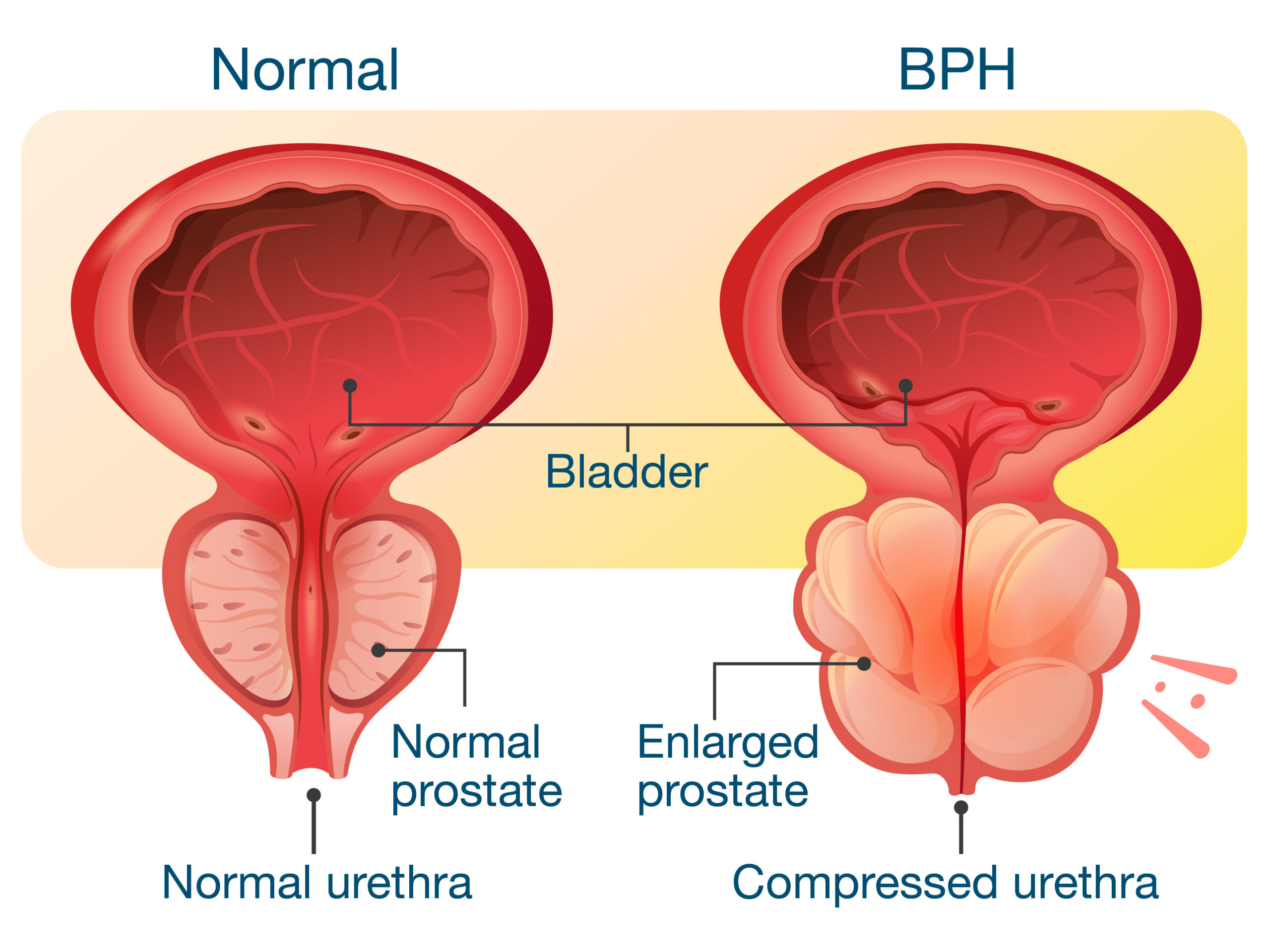
When the prostate enlarges, it can press on the urethra, the tube that carries urine out of the body, and block urine flow.
What is Aquablation therapy?
Aquablation therapy is a minimally invasive treatment that uses a heat-free waterjet and real-time imaging to remove excess prostate tissue.
Do I need major surgery?
Not necessarily. Aquablation therapy treats an enlarged prostate without external incisions.
How long is recovery?
Most people return to normal routines within a few weeks.
Will this affect sexual function?
This treatment is designed to reduce the risk of long-term sexual side effects.
Does it work long term?
Clinical studies show symptom relief lasting at least five years for many patients.
Why should I choose Aquablation therapy over traditional surgery?
Transurethral resection of the prostate (TURP) uses heat to remove prostate tissue. Aquablation therapy uses a heat-free waterjet and real-time imaging, which allows for more precise treatment and may lower the risk of certain side effects.
What is an enlarged prostate (BPH)?
An enlarged prostate (BPH) is a non-cancerous condition where the prostate grows and presses on the urethra, making it harder to urinate.
Common symptoms include:
- • weak urine stream
- • frequent urination
- • waking up at night to urinate
- • difficulty fully emptying the bladder
Is Aquablation therapy right for you?
Aquablation therapy may be a good option if urinary symptoms from an enlarged prostate are affecting your daily life.
It is often considered when:
- • symptoms are getting worse
- • medications are not providing enough relief
- • you want a minimally invasive alternative to traditional surgery
Compared with traditional procedures such as TURP, Aquablation therapy offers similar symptom relief with a lower risk of certain side effects in many patients
What are the side effects of Aquablation therapy?
Aquablation therapy is designed to reduce the risk of long-term complications while treating an enlarged prostate.
Most side effects are temporary and may include:
- • burning with urination
- • blood in the urine
- • urinary urgency or frequency
- • mild pelvic discomfort
In clinical studies, long-term issues such as incontinence or sexual dysfunction were uncommon compared with traditional surgical approaches.
How does Aquablation therapy work?
Aquablation therapy is a procedure that uses robotics and real-time imaging to remove excess prostate tissue blocking urine flow. The procedure is performed under anesthesia and typically takes about one hour. Most patients stay overnight for observation.
Step 1: Planning your treatment
Your surgeon uses ultrasound imaging and cystoscopy to view the prostate in real time and create a precise treatment plan.
Step 2: Removing the tissue
A robotic system follows that plan and removes the excess tissue using a heat-free, high-precision waterjet.
What is recovery like after Aquablation therapy?
Most patients recover quickly and return to normal routines within a few weeks. You may go home the same day or stay overnight. Temporary symptoms such as mild burning, urgency, or blood in the urine are common and improve as healing progresses.
How soon will symptoms improve?
Many patients notice improvement within a few weeks. Symptoms continue to improve over time as healing progresses.
If enlarged prostate symptoms are affecting your sleep, comfort, or daily routine, it may be time to talk with a specialist.
Have more questions about recovery or side effects?
After the procedure, you will recover in a monitored hospital setting until the anesthesia wears off. Most patients stay overnight, although some go home the same day. It is normal to feel tired for a day or two.
Recovery is gradual. Most people return to normal routines within a few weeks. It is common to notice mild burning with urination, urinary urgency, or light bleeding at first. These symptoms improve as healing progresses.
Common temporary side effects may include:
- burning with urination
- blood in the urine
- frequent or urgent urination
- mild pelvic discomfort
A catheter is placed to help drain urine after the procedure. It is typically removed within 24 to 72 hours, depending on your surgeon’s plan.
Light activity such as walking is encouraged soon after surgery. Most people return to normal routines within a few weeks.
You should avoid heavy lifting and strenuous activity until your care team says it is safe.
Do not drive for at least 24 hours after anesthesia. You may resume driving once you are no longer taking prescription pain medication and feel comfortable moving normally.
Sexual activity should be avoided for several weeks to allow proper healing. Your surgeon will let you know when it is safe based on your recovery.
Contact your care team if you experience:
- fever over 101°F (38.5°C)
- inability to urinate after catheter removal
- persistent nausea or vomiting
Many patients notice improvement in urinary symptoms within a few weeks. Symptoms continue to improve over time as healing progresses.
Most patients experience long-lasting relief. While no procedure can guarantee permanent results, Aquablation therapy has shown durable outcomes in clinical studies.
A follow-up appointment will be scheduled to monitor healing, review symptoms, and make sure recovery is progressing as expected.
All medical procedures carry some risk. Common temporary side effects include urinary burning, blood in the urine, urgency, or mild discomfort.
Less common risks include infection, bleeding, difficulty urinating, or sexual dysfunction. Your care team will review all risks and benefits with you before treatment.