
Written by Erica Houskeeper for Northwestern Medical Center
It was a perfect late December day for a backcountry ski trip.
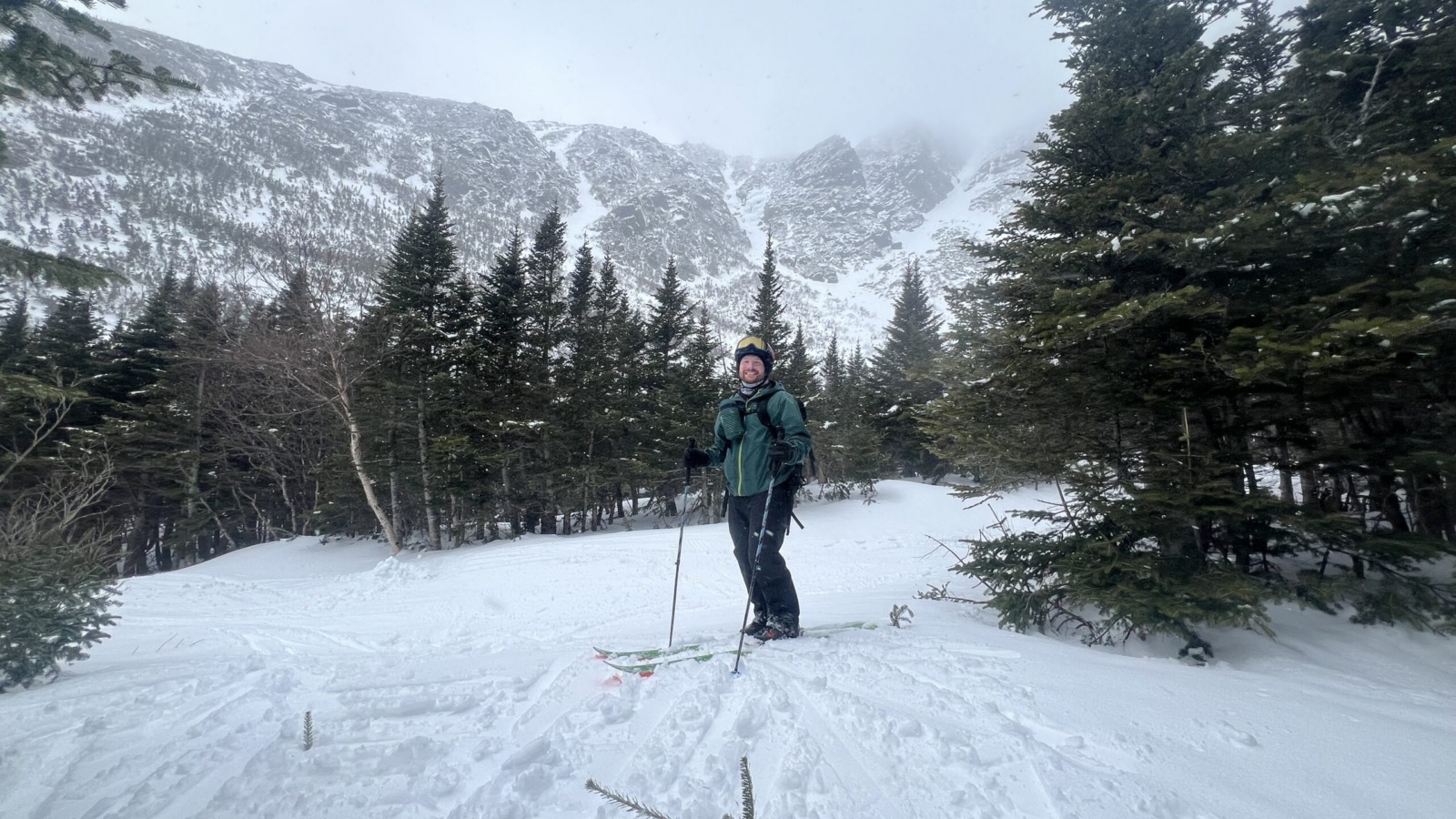
Kyle McQuoid, an experienced backcountry skier from Massachusetts, drove to the northern Green Mountains. He clipped into his skis and adjusted his goggles, ready to explore the woods by Jay Peak Resort.
The day after Christmas was sunny and calm, with fresh snow everywhere. Even though it was close to zero degrees, McQuoid was eager to be outside.
As he skied down a steep slope, his ski sank into deep snow when he tried to turn left and slow down. Then he felt a snap.
“I twisted my leg, and I felt my leg snap right away,” he says. “And I knew it was broken.”
He had broken his tibia and fibula, the two long bones in the lower leg that connect the knee to the ankle. Doctors call this kind of injury a “boot top” fracture.
McQuoid called for help in the woods, and nearby skiers gave him hand warmers and extra jackets. They called 911 and worked with Jay Peak’s ski patrol. Soon, another group of skiers showed up, and one of them had a portable emergency sled. Because waiting too long could lead to hypothermia, they carefully put him in the sled and guided it down the mountain.
“I was shivering, and I was definitely cold,” he says, unaware at the time that he also had severe frostbite. “But as long as I stayed still, it wasn’t bad. If you touched my lower leg or tried to move it, it hurt a lot. Getting me into the sled was definitely painful,” he says.
After spending hours in the cold, he was taken by ambulance to the emergency room, still wearing his ski boot on his injured leg. The break was a spiral fracture, and doctors had to operate quickly to avoid complications.
“These kinds of fractures can get worse very quickly,” says Orthopedic Surgeon Nathan Mauser, MD, who operated on McQuoid’s leg that evening. “You can permanently lose blood supply to your leg if it swells too much. My approach is to always think 10 steps ahead, even if someone like Kyle seems to be doing OK.”
During surgery, doctors put a nail inside his shin bone and added a few screws to keep it stable. The frostbite did not affect his leg surgery, but it still needed extra care. After the orthopedic procedure, the general surgery team was brought in to treat the frostbite wounds.
His recovery would take a while.
“We expect a severe break like this to heal in about eight weeks, but it can take eight to twelve weeks, followed by a lot of physical therapy,” says Curtis Gauthier, PA, who treated McQuoid during surgery.
McQuoid stayed in the hospital for two nights before going home.
“I felt like I was in really good hands with the doctors and nurses the whole time,” McQuoid says.
“Everyone I interacted with—doctors, nurses, the operating team, and staff—made a potentially very painful and traumatic event actually relatively comfortable and quite pleasant,” McQuoid says.
He is now recovering at home and attending physical therapy.
“I especially want to thank Dr. Mauser, Curtis Gauthier, and the entire operating team for coming in late on a holiday weekend to fix my leg,” he says. “And thanks to Nurse Practitioner Adam Boise and his team for artfully removing the ski boot from my broken leg, which was easily the highlight of the entire experience.”
McQuoid is eager to ski again but plans to be more cautious next time.
“I will be a little more careful and ski a little more conservatively when I’m in the backcountry,” he says.