
When Mary Brzozowy and her husband moved to Vermont a decade ago, they looked forward to long road trips to enjoy the scenery engaging in conversation about their new home. However, the reality was different; Mary found herself falling asleep during their drives almost as soon as she clicked her seatbelt, waking only to realize she had missed both the views and quality time with her husband.
Beyond sleepiness on the car rides, Mary noticed a persistent “fogginess.” She recalled the frustration of being mid-conversation and suddenly losing her train of thought: “And in the middle of my sentence, it’s like, oh my God, oh, what is it that I need to say.” Despite the symptoms, Mary didn’t think she had a sleep problem.
Thankfully, while many dismiss such symptoms as “just an age thing,” Mary’s Primary Care Provider (PCP) recognized the symptoms as potential red flags for Obstructive Sleep Apnea (OSA) and referred her to Northwestern Medical Center’s Sleep Center.
Current medical literature supports her PCP’s thinking; a 2025 study in the Journal of the American Geriatrics Society[i] found that older adults, especially women, with untreated OSA are significantly more prone to memory lapses because the brain’s nightly “cleansing” process is interrupted.
At her husband’s urging, Mary followed through with the referral to Northwestern Medical Center’s (NMC) Sleep Center. where she was able to be seen by board-certified sleep medicine physician, Dr. Haitham Nsour within just weeks.
Mary was pleased with Dr. Nsour’s thoroughness and said the visit “was not just good, it was very, very good.” Dr. Nsour recommended an overnight sleep study.
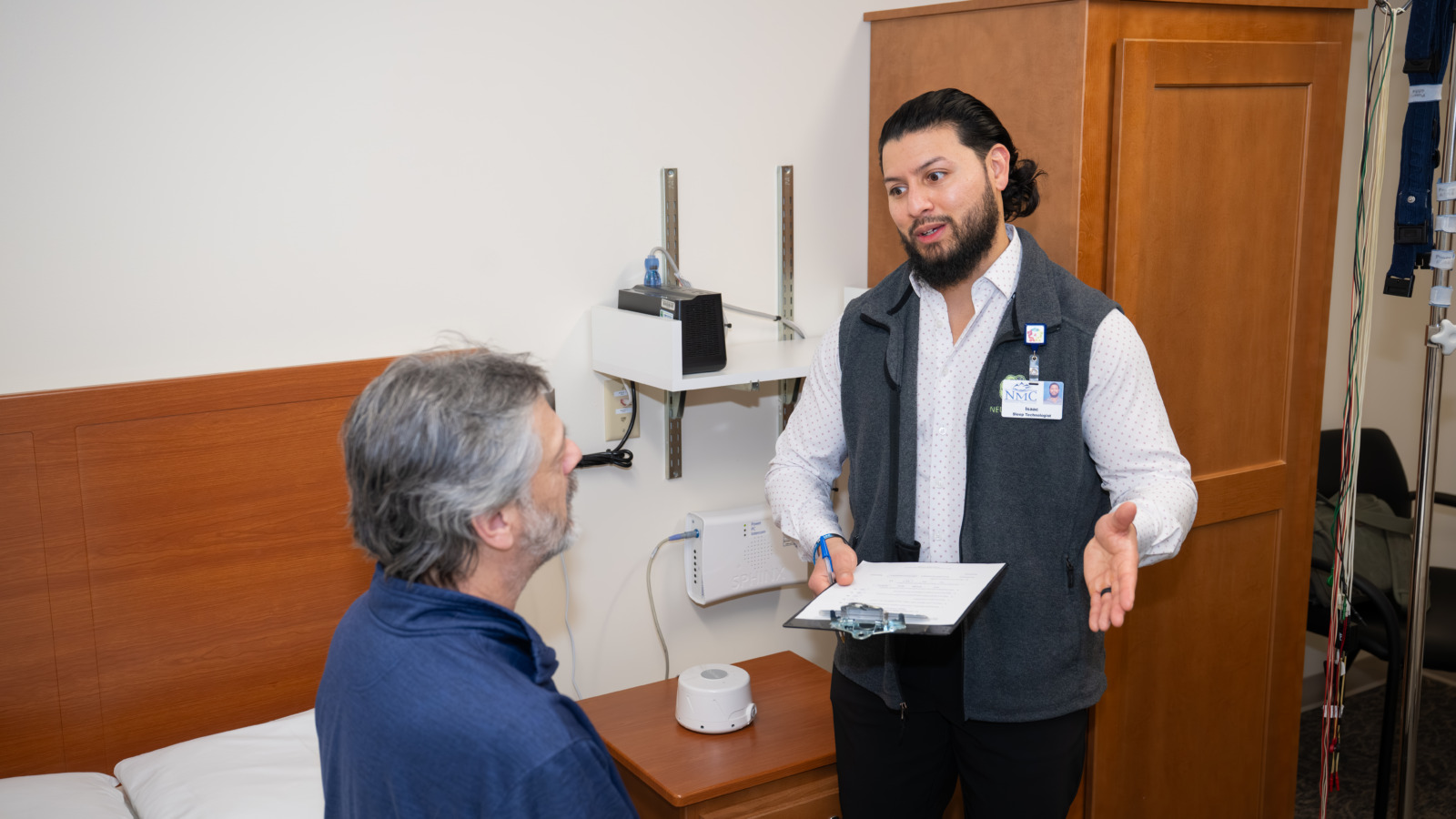
NMC’s Sleep Center provides quiet rooms with hotel-style beds, in a private suite to ensure patients feel at home.
Mary described the study as a wonderful experience, largely due to the staff. She said that Isaac De La Cruz, an NMC Sleep Technologist, was knowledgeable, sociable, and very capable of making the odd setting of a sleep lab feel comfortable. “The directions were very clear,” Mary recalled, and the staff made her feel like everything was going to be fine.
De La Cruz offers a tip for a good night’s sleep: “Turn off the TV and computer before bedtime to allow your mind to calm” and allow yourself time to transition into sleep after a busy and stimulating day.
The study confirmed Dr. Nsour’s suspicion, and Mary was prescribed a Continuous Positive Airway Pressure (CPAP) device to improve her sleep. Mary’s improvements were immediate. After only seven days of CPAP therapy, she reported feeling “90% better,” and noticed she was more engaged, had more energy for daily activities and was experiencing fewer memory issues.
This transformation aligns with a 2024 report in Neurology[ii], which demonstrated that consistent CPAP use can protect the hippocampus, the brain’s memory center, and delay cognitive decline up to a decade. For Mary, this meant staying awake for the scenery on road trips and being fully present in conversations again.
Kylee Burt, NMC’s Sleep Center Coordinator explained that the intimate relationship between the Sleep Center and Pulmonary Medicine clinic streamlines patient care and diagnosis. NMC’s model results in fewer visits, lower co-pays, and more personal experience than larger institutions.
For anyone experiencing similar “fogginess” or fatigue, Mary has a simple piece of advice: “Do not wait for the symptoms to worsen; talk to your Primary Care Provider about a referral to the Northwestern Medical Center Sleep Center.
[i] https://aasm.org/insomnia-combined-with-sleep-apnea-is-associated-with-worse-memory-in-older-women/
[ii] https://neurosciencenews.com/sleep-apnea-memory-brain-28842/