Hand Hygiene
Ask those around you to practice hand hygiene.
Ask those around you to practice hand hygiene.
Cleaning your hands is a simple and effective way to prevent infections. Hand hygiene can prevent the spread of germs, including those that are resistant to antibiotics. This means that everyone—physicians, nurses, staff, visitors, and patients—should be cleaning their hands before and after contact to reduce the risk of infection and protect themselves.
Using soap and water or an alcohol-based hand sanitizer are both effective ways to clean hands. It’s important to remember to make sure you clean all areas of your hands since fingertips, thumbs and in-between fingers can often be missed if you wash too quickly.
The World Health Organization has identified hand hygiene as the most important measure healthcare workers can take to avoid transmission of harmful germs and prevent health care associated infections. However, according to studies by the CDC, some healthcare workers practice proper hand hygiene less than half the times they should.
To be considered compliant, NMC requires all physicians, nurses and other staff/volunteers to clean their hands with an alcohol-based hand rub, both before and after contact with a patient or the patient’s environment. The initial results of internal audits highlighted a need for intensive staff education as we worked toward our goal of 90% hand hygiene compliance in all departments.
We are tracking hand hygiene compliance in all clinical areas. The below graph shows three examples of this data.
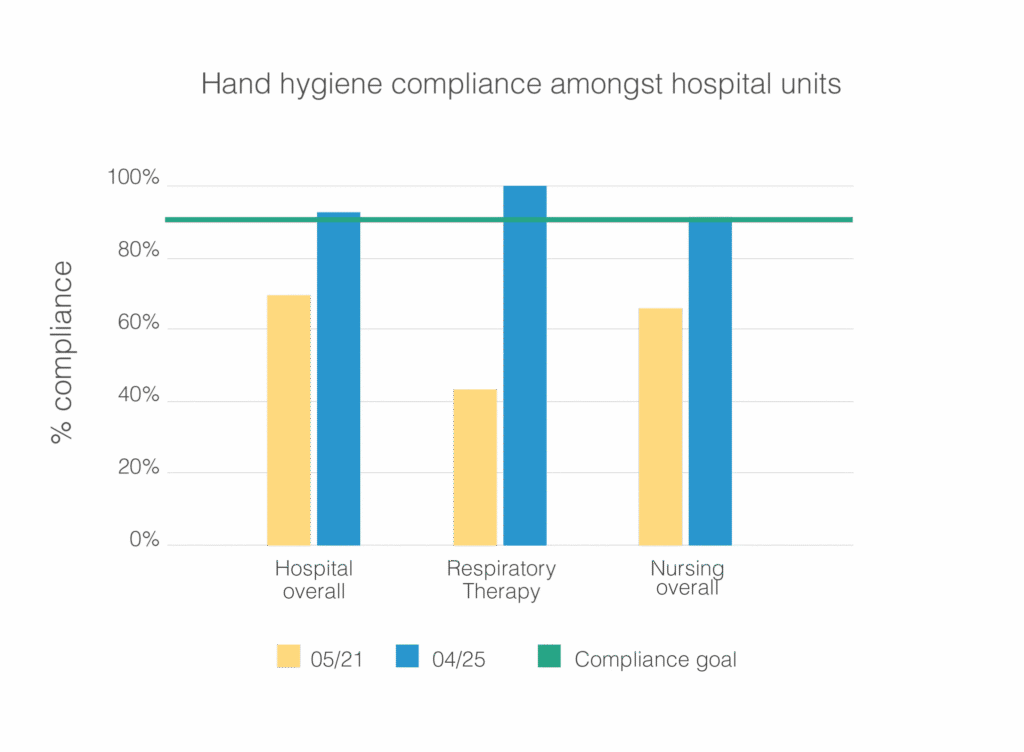

Starting in April of 2021, a multi-disciplinary Hand Hygiene Observation Team began assessing hand hygiene compliance at Northwestern Medical Center. Roughly 1000 direct observations of hand hygiene compliance are recorded each month, capturing results from every department that has contact with our patients. Results are reported to all staff and posted to department communication boards on a monthly basis.

Existing employees receive annual education on when to use hand hygiene and gloves—those who are identified as having challenges are given individualized coaching. New employees are trained in groups and receive one-on-one training on proper hand hygiene methods.

Dispenser units have been installed both inside and outside of all patient rooms to make compliance convenient. Units are monitored daily to ensure they are full and functioning.

Using the CDC’s Clean Hands Count framework, patients have been invited to take an active role in their safety and health by asking or reminding healthcare providers to clean their hands.

Staff are also encouraged to promote compliance in their unit by observing their coworkers and providing hand hygiene reminders as needed. Monthly celebrations award the units with the highest hand hygiene compliance.
Patients and their visitors can play a role in asking and reminding healthcare providers to clean their hands. Your hands can spread germs too, so protect yourself by cleaning your hands often.

Before eating food

Before and after touching your eyes, nose, or mouth

Before and after changing dressings or bandages
After using the restroom

After blowing your nose, coughing, or sneezing

After touching hospital surfaces such as bed rails, bedside tables, doorknobs, remote controls, or the phone
Don’t be afraid to speak up—we welcome your input! Here are some nice ways to remind your visitors and the people treating you:
Hand hygiene
Please reach out to us with any questions or concerns about what Northwestern Medical Center is doing to keep patients safe. It is important that we all work together to prevent infections and attain the best possible health outcomes.